
Exploring Northland: Kawiti Glowworm Caves & Puketi Forest
Northland is home to some of Aotearoa New Zealand’s most remarkable natural wonders — places where geology, ecology, and Māori heritage intersect in meaningful and memorable ways. Two standout locations, especially for visitors arriving by cruise ship, are the Kawiti Family Glowworm Caves in Waiomio and Puketi Forest, one of Northland’s largest remaining tracts of ancient native bush.
This blog explores the history, cultural significance, and unique features of both sites, offering practical context for travellers wanting an immersive experience.
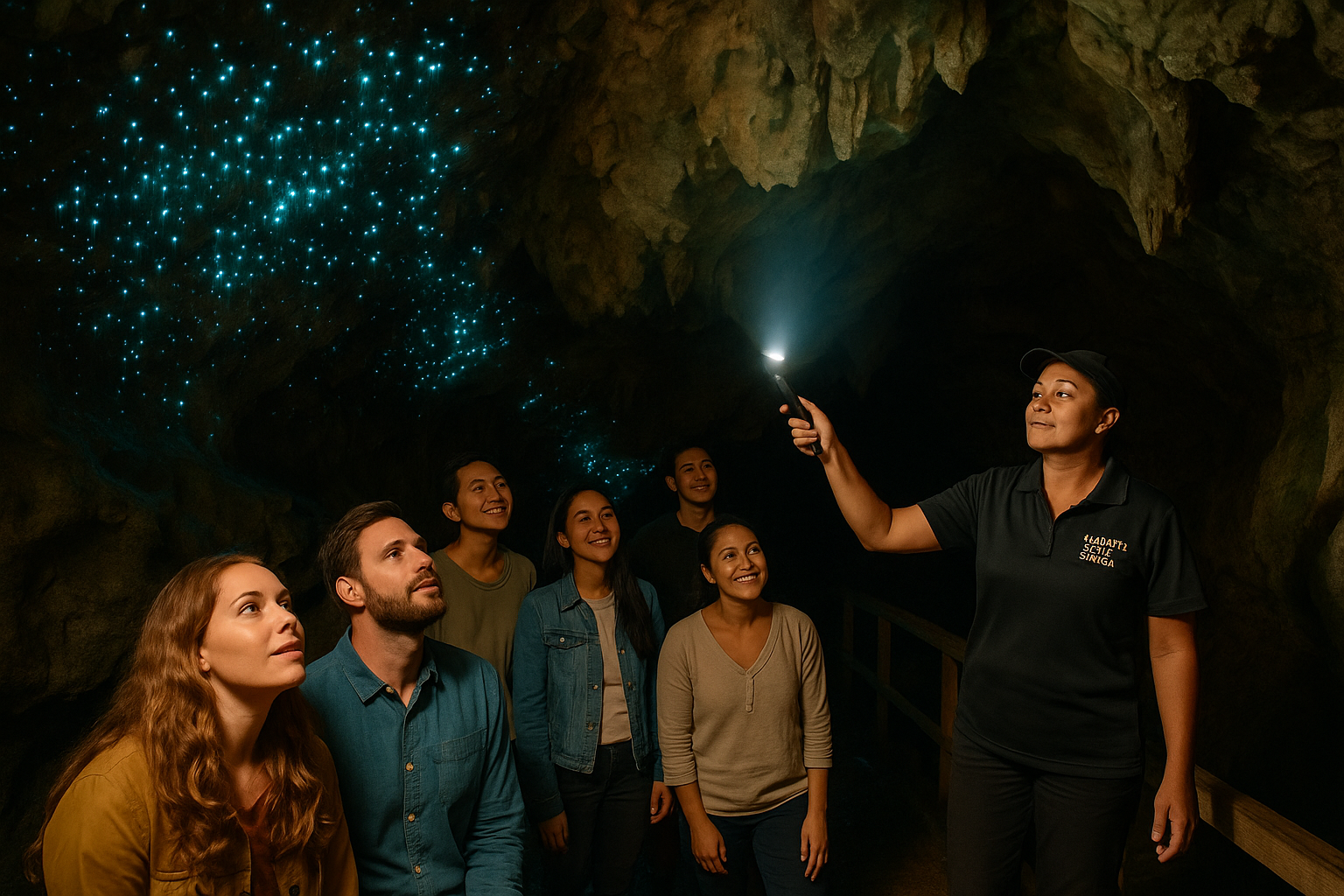
Kawiti Family Glowworm Caves
Deep Māori Ancestry
What truly distinguishes the Kawiti Caves is the profound Māori whakapapa (genealogy) tied to the land.
The caves are owned and guided by the Kawiti whānau, descendants of the renowned Ngāpuhi chief Kawiti, who played a pivotal role in 19th-century Northland history — particularly during the Northern Wars.
The connection goes back further still:
According to oral tradition, the caves and surrounding valley were first discovered by Hineamaru, a respected chieftainess of Ngāti Hine. Her people settled and thrived in the region, utilising the valley and its natural features. Descendants of both Hineamaru and Kawiti continue to care for the caves today, preserving them as both a cultural taonga (treasure) and natural wonder.
Cultural Interpretation and Preservation
Tours through the caves are led by members of the Kawiti family, who share legends, whakapapa connections, and insights into how glowworms live — how they hunt, glow, and form their shimmering webs.
Because this is a sacred family site, the experience blends science and cultural storytelling, offering a more holistic understanding of how Māori have interacted with the land for centuries.
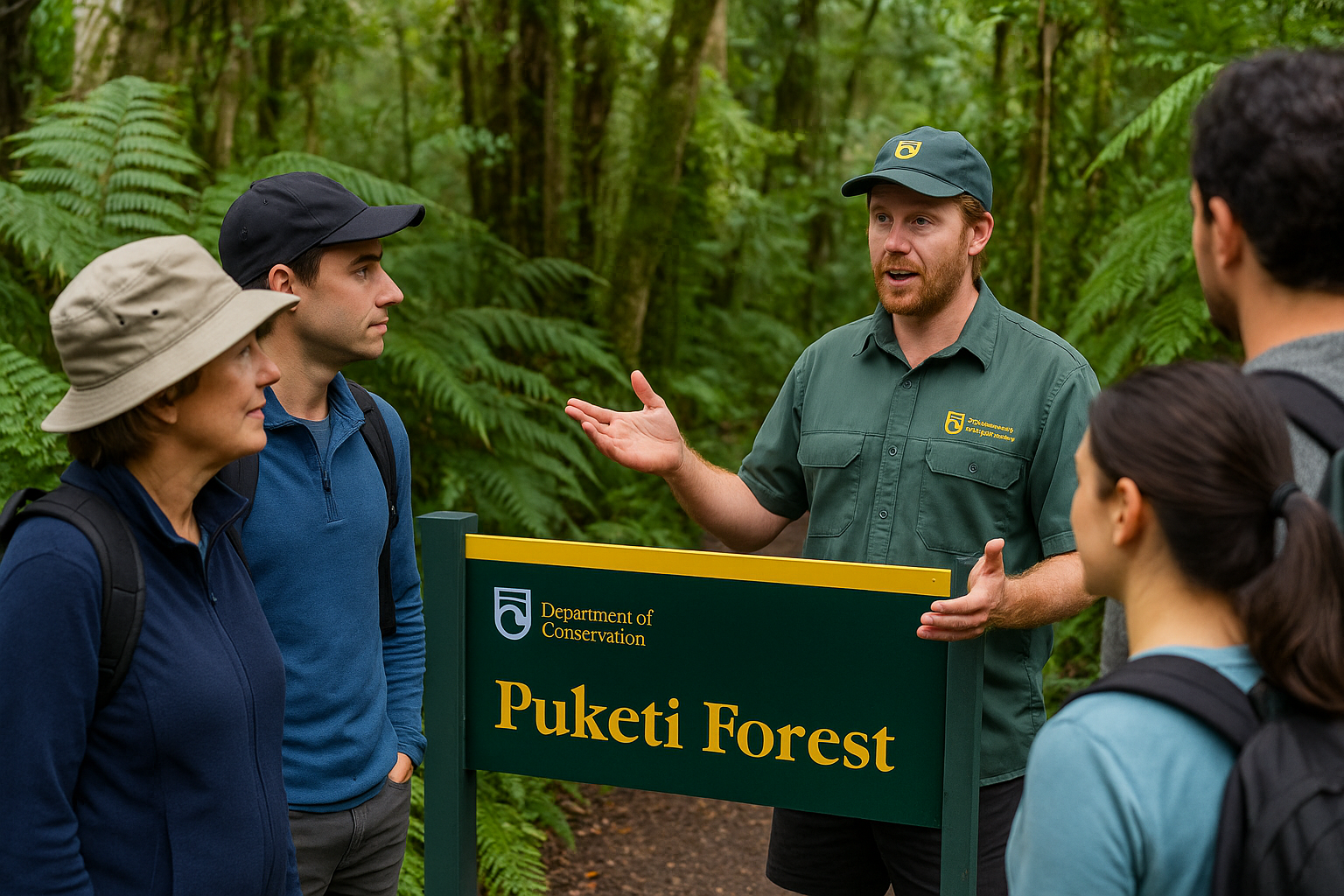
Puketi Forest
One of Northland’s Ecological Giants
Puketi Forest, adjoining the Omahuta Forest, spans thousands of hectares and is one of the most significant remnants of original Northland kauri forest. Much of the region’s kauri was logged in the 1800s and early 1900s, but Puketi remains a stronghold for old-growth trees, including towering mature kauri that are hundreds of years old.
The forest also contains rich biodiversity:
Podocarp species such as tōtara and rimu
Hundreds of unique ferns, mosses, and epiphytes
Native birds including kākā, tui, kererū, and in certain protected areas, reintroduced kiwi and kōkako
Walking Tracks & Forest Experiences
Puketi offers a range of walks, from accessible boardwalk loops to more challenging backcountry tramps.
One of the most popular routes is the Puketi Nature Trail, a short loop showcasing large kauri, lush undergrowth, and in some areas, glowworms after dark.
Mountain biking is also permitted in some sections, with old forestry roads offering scenic routes through the bush.
Cultural & Historical Significance
For Māori communities, Puketi has long been a place of food gathering, rongoā (traditional medicine), and resource collection. Kauri gum and timber extraction played major roles during early European settlement, shaping the economic history of Northland.
Today, the forest is a protected area co-managed by the Department of Conservation and the Puketi Forest Trust, whose volunteers work to restore native bird populations and protect the forest from pests.
Kauri Dieback Awareness
Because kauri trees are vulnerable to kauri dieback disease — a soil-borne pathogen — visitors must use designated cleaning stations and avoid stepping off marked tracks. This ongoing conservation effort helps ensure that these majestic trees remain standing for future generations.
—
Why These Two Locations Matter
The Kawiti Caves and Puketi Forest offer a rare combination:
1. Geological significance
Limestone cave formations millions of years old
Unique glowworm ecosystems
Ancient kauri forests predating human arrival
2. Cultural heritage
Both sites are deeply tied to Māori iwi (tribes) and hapū (sub-tribes), with stories, stewardship, and traditions continuing into the present day.
3. Ecological importance
These environments preserve species not found anywhere else and form part of New Zealand’s unique natural identity.
4. Accessibility for visitors
Both attractions can be explored within a half-day, making them ideal for travellers with limited time, such as cruise-ship guests.
—
Tips for Visitors
Wear sturdy footwear — tracks can be uneven or damp.
Follow conservation instructions, especially around kauri trees and glowworm habitats.
Ask questions of guides — their knowledge brings deeper understanding of the land and its stories.
Bring a light jacket — caves are cool, and forests can be misty.
Photography rules vary — especially inside glowworm caves, where light can disturb the insects.